
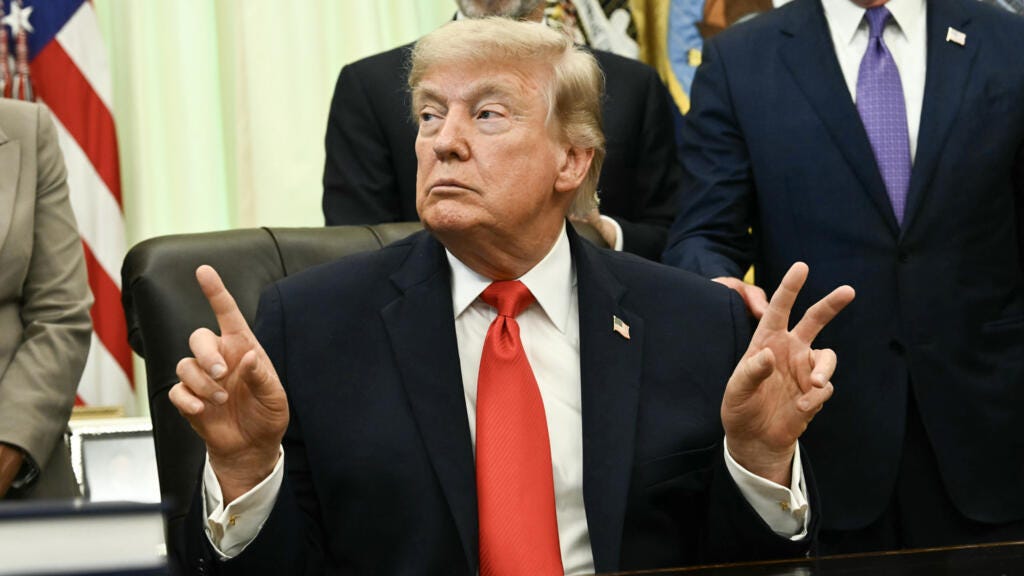
This year has been different. Ever since the kidnapping of Maduro, we have been living at the mercy of American foreign policy. It seems like a perfect environment for geopolitics traders - plenty of complex global events combined with the global rise of prediction markets.
At the same time, Polymarket enjoys record-high volumes this year. Outside of sports, geopolitics represents one of the biggest categories on the platform. And yet, plenty of whales and sharp traders focusing on geopolitics have suffered heavy losses this year.
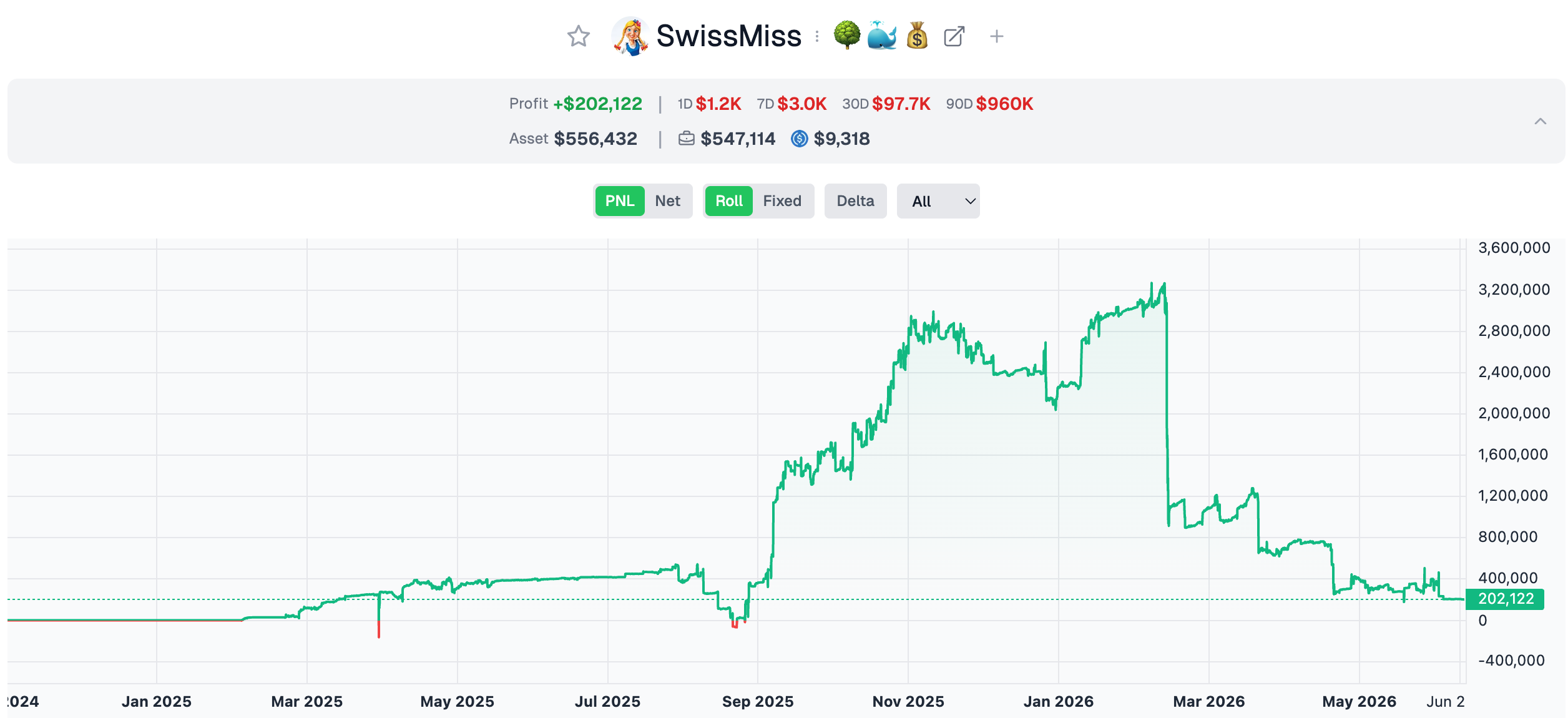
The reason is simple. Along with the rising popularity of prediction markets and record high significance of geopolitics in our lives, came misinformation. Trump announced an imminent Iran MoU over 39 times before it finally happened. The Strait of Hormuz has been opened several times, and yet there’s little traffic to show for it. Axios turned from a respectable publication to a meme. Not only traders, but also mainstream analysts are consistently wrong on the most important matters around the Iran war.
Somehow, a seemingly perfect environment for trading turned into a cursed one. But it doesn’t need to stay that way. At least for you.
What Has Changed?
Misinformation (or information warfare) is nothing new. The media were used to distribute false information for decades. Various state actors were always looking to influence the public discourse in a way that favored them, rather than to provide us with an accurate description of reality.
However, never before have we seen such an extreme. The foundational text for many traders, Superforecasting by Tetlock, proved that paying objective attention to slightly biased media was enough to produce a forecast that rivaled that of a CIA analyst. This book was written in 2015 and described a project taking place between 2011 and 2013. Despite only 11 years passing since the publication, plenty has changed in our world.
Social Media
Facebook was launched in 2004. Yet, it took over a decade for it to be used in a political campaign. In 2016, the Trump campaign hired Cambridge Analytica. It was a social media research company that profiled millions of Facebook users and helped the campaign create tailor-made political ads that many say pushed Trump ahead of Clinton. The company was later sued out of existence, but its legacy lives with us.
Ever since the 2016 US Presidential Election social media have been the main political battleground. Politicians had realized that social media gives enormous reach to those who know how to use it. It also allows for information to spread in a matter of seconds. Each cycle we see how the political discourse moves from newspapers and TV towards X, podcasts, YouTube and other platforms.
However, the same combination that makes social media so attractive for politicians, makes it a perfect ground for spreading misinformation. From America to Palestine, pretty much every country that has a foreign policy, has an interest in shaping the online discourse to their liking.
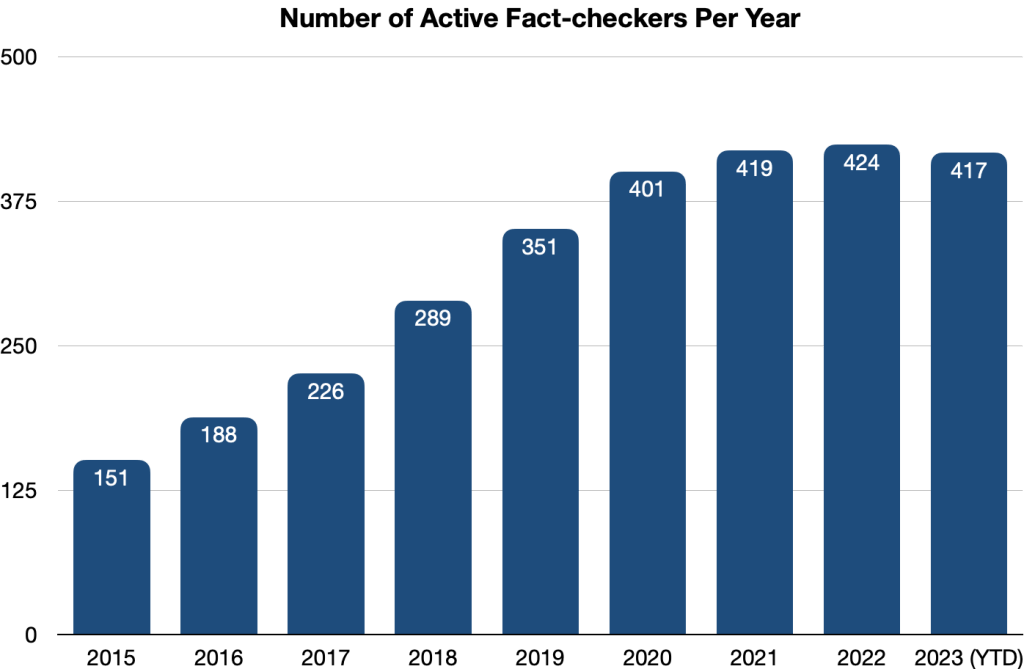
Compared to 2015 (or 2011-2013), there’s exponentially more misinformation in the information space.
Prediction Markets
In the last two years, prediction markets have grown from a niche nuisance to a globally recognized industry with billions in volume. Plenty of professional and amateur traders are dabbling in various markets, from mentions to ceasefire markets.
Per Tetlock, such a market should provide the most accurate forecast possible. In his book, he proved that the ultimate forecast comes from pooling and averaging various forecasts. Prediction markets are the endgame in that regard: thousands of traders providing their forecast with every transaction create a single forecast, embodied in the Yes/No price of a contract.
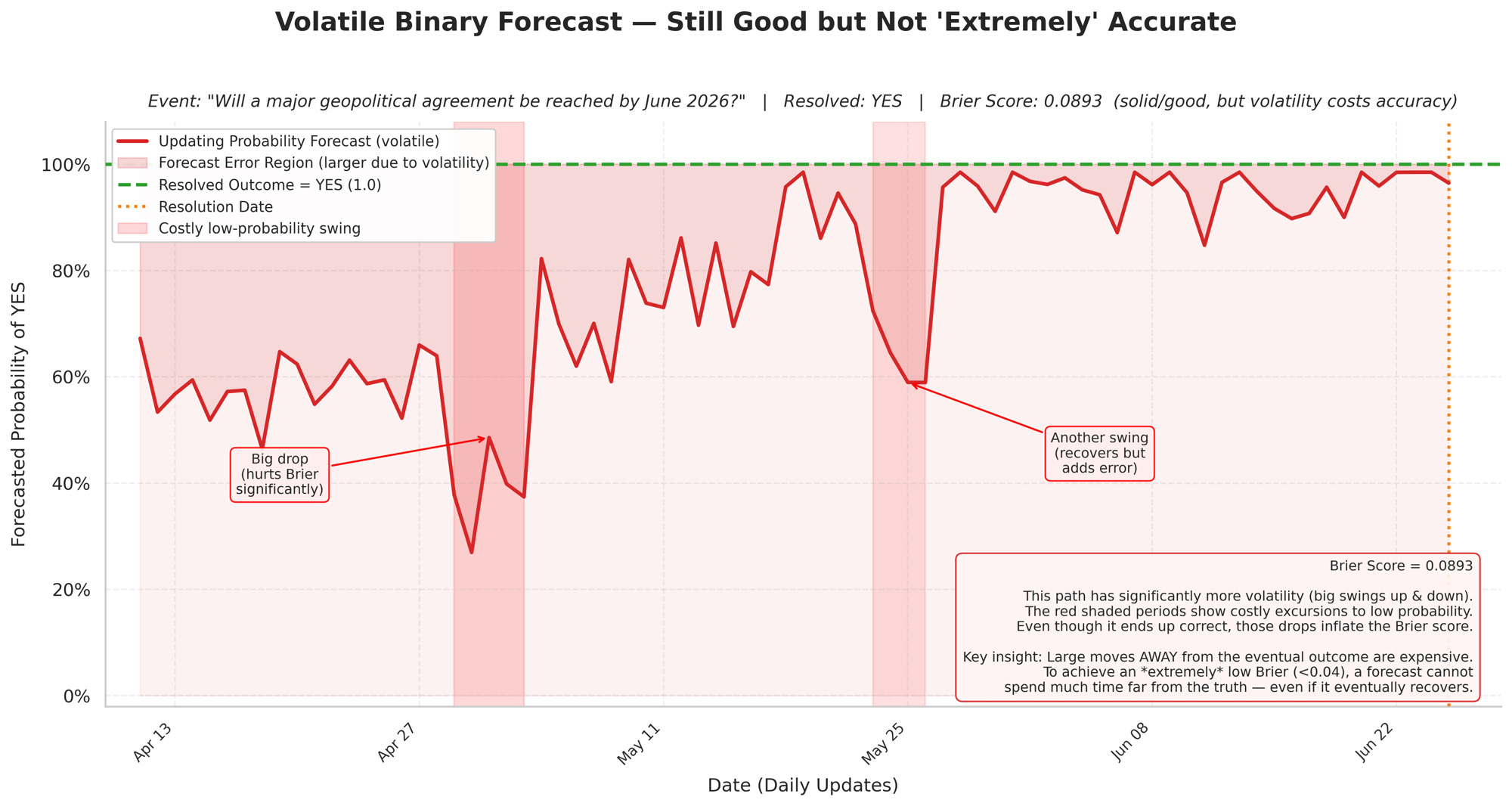
However, if that were true, the forecast should look like this:
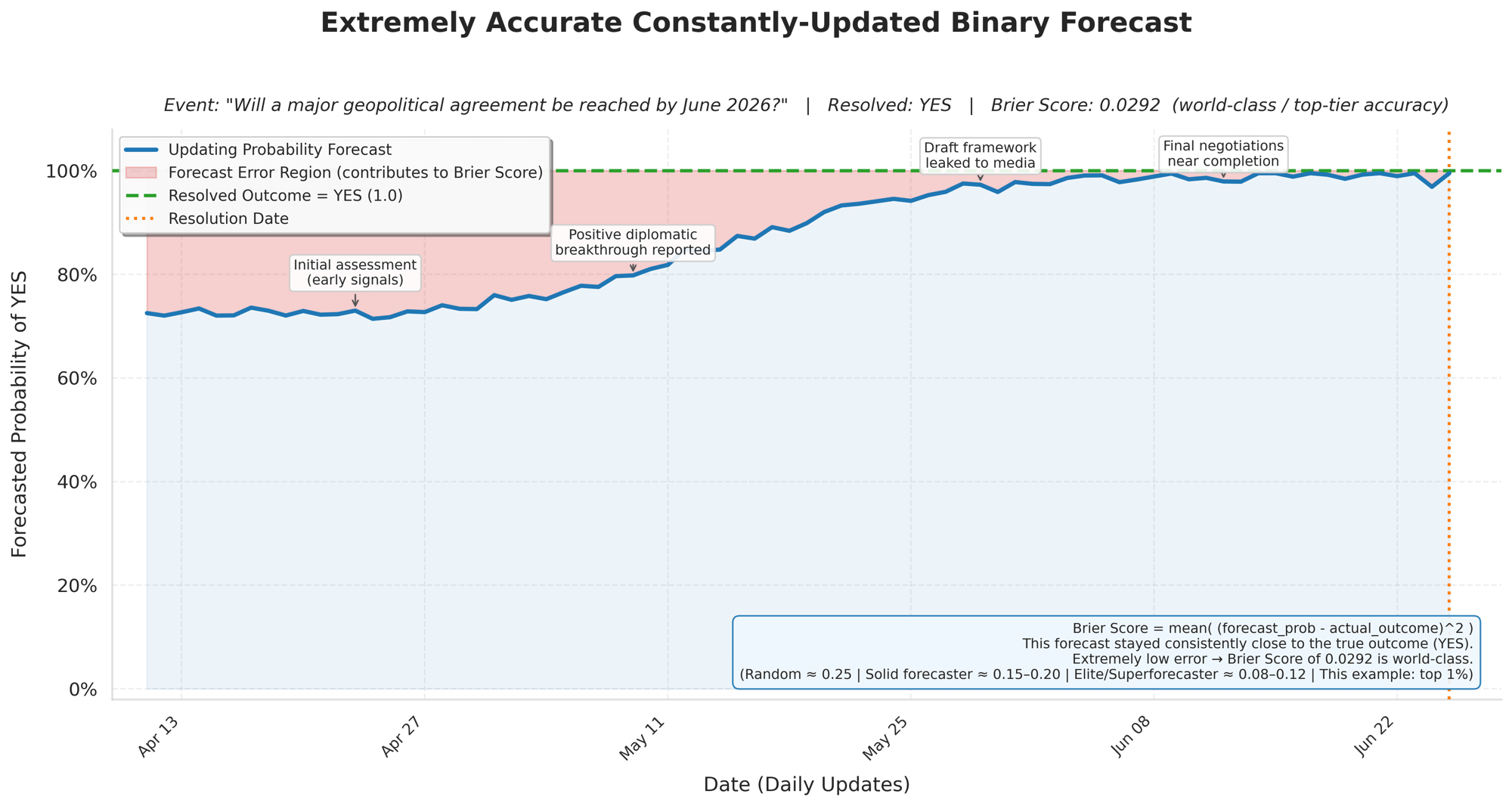
Rather than like this:
Or this:
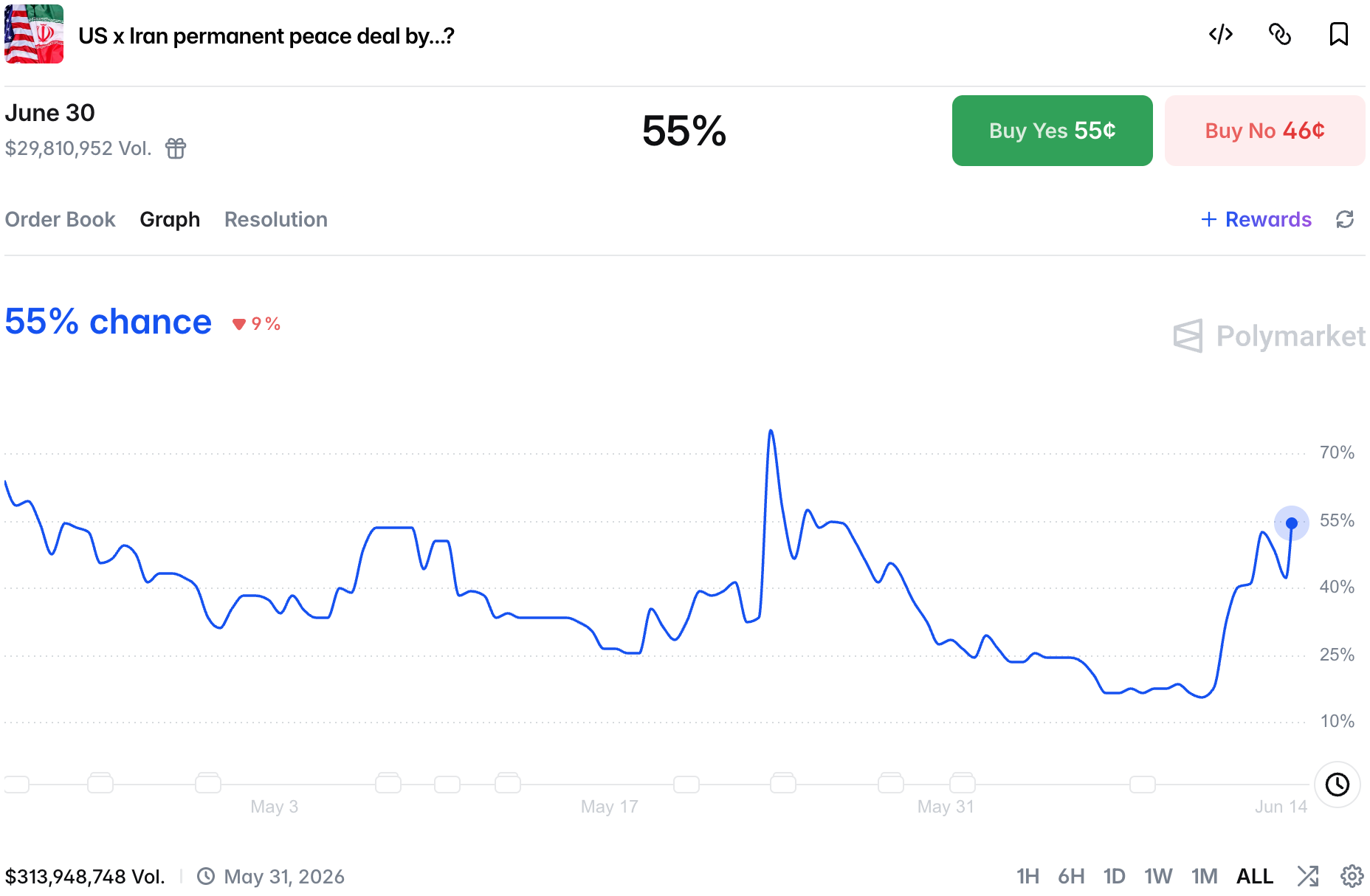
Each spike of volatility increases the Brier score of the collective forecast. In the example above, the market finally resolved to Yes. Grok estimated the average Brier score of the market at 0.38. A value of 0.25 represents a naive constant 50% forecast, meaning that the wisdom of the crowds performed worse than a coin flip.
Seems like a perfect environment for sharp traders, but is it?
Garbage In, Garbage Out
Many market categories trade based on sophisticated models. Sports is a great example. With plenty of statistical data available, profitable sports traders create models that provide an accurate fair value for every market. Similar things happen in the mentions world, where past speeches are used to calculate the baseline value of each mention.
Various culture markets, especially music, depend on sophisticated models. Talk of the Charts account on X gathered 1.9 million followers thanks to its accurate forecast of Billboard charts.
Elections also run on models. Nate Silver runs probably the most popular US election model in the world. His projections serve as a baseline for many sharp traders around the world.
All of this is possible thanks to an abundance of data. Sports (especially American sports) live on statistics. Each game commentator issues more or less obscure data to highlight a new record. Thanks to the internet, music streams data can be accessed practically live. Popular elections get a new poll practically every day.
However, when it comes to geopolitics, there is close to no data. Every diplomatic effort, every war plays out differently. There’s hardly any baseline value to base your forecast on. And since every country tries to disguise their true intention, the only source of signal we have are either real developments on the ground (tracked by e.g. OSINT accounts) or scoops from government officials.
Geopolitical markets are inherently reactive to the news cycle.
The Corruption of Data
The rise of misinformation has consequences. Even though social media has exponentially increased the reach of many people and organizations, there still is a limit. There is only so much we can see and read.
If misinformation is on the rise, it is only logical that truth is on the decline. Since the news cycle is the main input of geopolitical forecasts, its corruption must contribute to the overall quality of the forecasts.
The perceived volatility of markets like the US x Iran permanent peace deal market (and thus the low accuracy of the collective forecast) is a representation of the low quality of the news.
A Twist
But there’s more. Before their meteoric rise, prediction markets were a niche product operating in a legal gray zone. Since the Biden administration, they’ve become legal. The Trump administration has embraced them even more with CFTC actively defending event contracts against state prosecution.
The change surely results from millions spent on lobbying. But usually, money alone is not enough to force such a change. To go against the gambling lobby (which spends millions itself), prediction markets must have offered something more. In my opinion, this “more” is hidden beneath the wisdom of the crowds theory.
If most political and geopolitical markets are reactive to the news, each market is essentially a quantitative measure of a given narrative:
The market on the Strait of Hormuz traffic normalization does not provide an accurate forecast. It rather represents the aggregate perception of the news cycle. We can see that more clearly when we compare Polymarket prices to Metaculus forecast:
Even the most optimistic forecast there is set on the 16th of August. The difference is simple - Metaculus forecasters have no incentive to significantly change their forecasts with the swings of the news cycle. They are optimizing for Brier score, which implicitly penalizes large swings in the forecast.
On the other hand, Polymarket traders are optimizing for profit. In the absence of reliable data swing trading headlines offers a better risk/reward profile than fundamental analysis.
A Measure of Effectiveness
My theory is simple. I believe that the US government (and other governments) is using prediction markets to measure the effectiveness of its misinformation campaigns. Before Polymarket, the government had only indirect measurements: impressions, engagements, etc. Now they have a direct KPI.
Let’s create a theoretical scenario. We will assume that after the Iran war had started, the US government was looking to control the price of oil. With the oil shortage being obvious after the Strait of Hormuz was closed, they needed to rely on the future perception (along direct interference on the oil markets) to keep the mid price in check. It’s really simple - if the market is led to believe that the Strait of Hormuz will open in the next 3 months, it will increase the price of the main oil benchmarks only slightly.
But how do you credibly signal that the Strait of Hormuz will open in the next three months? Trump cannot go on TV and just say it. It has no basis in reality as Trump is not the person that closed the strait. However, Trump can go on TV and manage expectations. Afterwards, government analysts can go on Polymarket and check the market price for the contract with a strike date one month out.
Today, the traffic normalization market with the end of July as a strike date trades at 31c for Yes. This means that traders expect the traffic to normalize in roughly 3 months. Just before the Iran MoU was announced, the market traded at 24c for the same strike. Now, despite the recent exchange of fire, no meaningful traffic through the strait and the strike date being 20 days closer, the market is up.
If I were behind the Strait of Hormuz misinformation campaign, I’d deem the recent narrative management a striking success (pun intended).
Small Conclusion
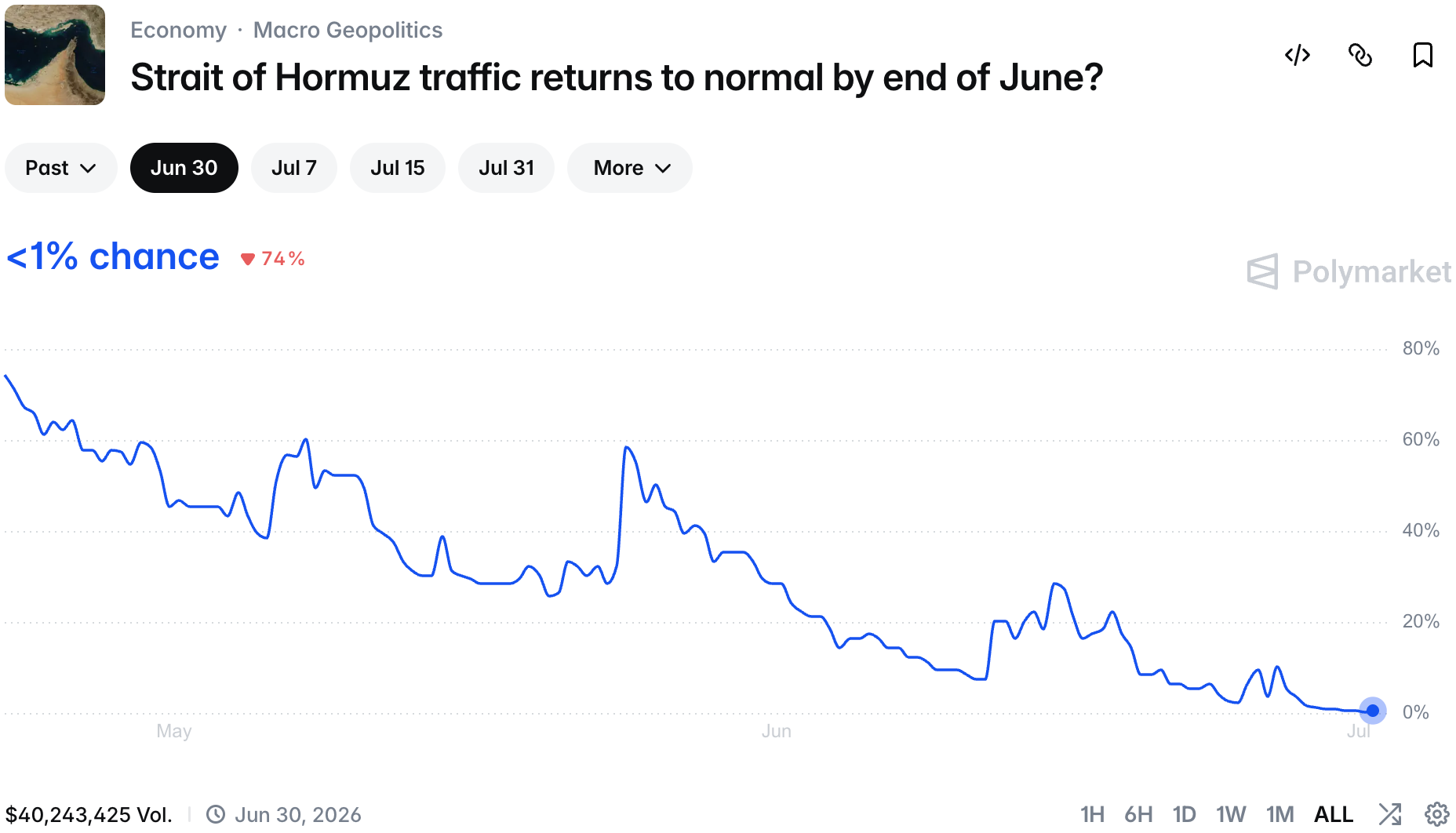
The Strait of Hormuz traffic normalization market with the end of June strike date has an approximate average Brier score around 0.24. The forecast was barely better than a naive constant forecast. Since the Strait of Hormuz issue can be based on actual data (daily traffic trend), it had a better score than our first example, permanent peace deal market, which scored 0.38.
However, with a Brier score of 0.24, this is hardly a good forecast. In fact it is not a forecast, it’s a representation of noise. Even a market on the event with more data available couldn’t achieve a decent Brier score in the face of misinformation.
If I were running a disinformation campaign, my base case would be for the forecasts to be rendered no different from a naive constant forecast of 50%. This would already be a huge success as my adversaries wouldn’t be able to predict my next moves with any meaningful accuracy. Anything above that is exceptional work; for the Brier score to go above 0.25, the forecast would need to predict mostly the opposite of the reality across its lifespan. In a sense, the misinformation campaign about the Iran MoU was a work of art.
How To Adjust?
Can we provide a fundamental forecast in the age of misinformation? Or are we forced to become swing traders? In theory, high Brier scores across recent geopolitical markets suggest there’s plenty of room for sharp forecasters to make bank. However, the fact that the quality of the source is poor makes it difficult to create a good fundamental thesis.
The answer to the questions posed earlier is complex. It all starts with market selection. First instinct might tell you that markets with higher Brier scores are more attractive for geopolitical traders. However, the reverse is true. Since all geopolitical markets are at the mercy of narrative management, the markets with the lower (but still elevated) Brier score represent the best opportunity for fundamental traders.
In our examples above, the permanent peace deal market had a Brier score of 0.38. The Strait of Hormuz traffic normalization market had a Brier score of 0.24. The former was trading purely on narrative, or vibes as the deal itself doesn’t even start to fix the reality on the ground. The latter, while heavily influenced by vibes, was also trading on data.
The reason for the lower Brier score is the presence of fundamental traders. Look at the charts:
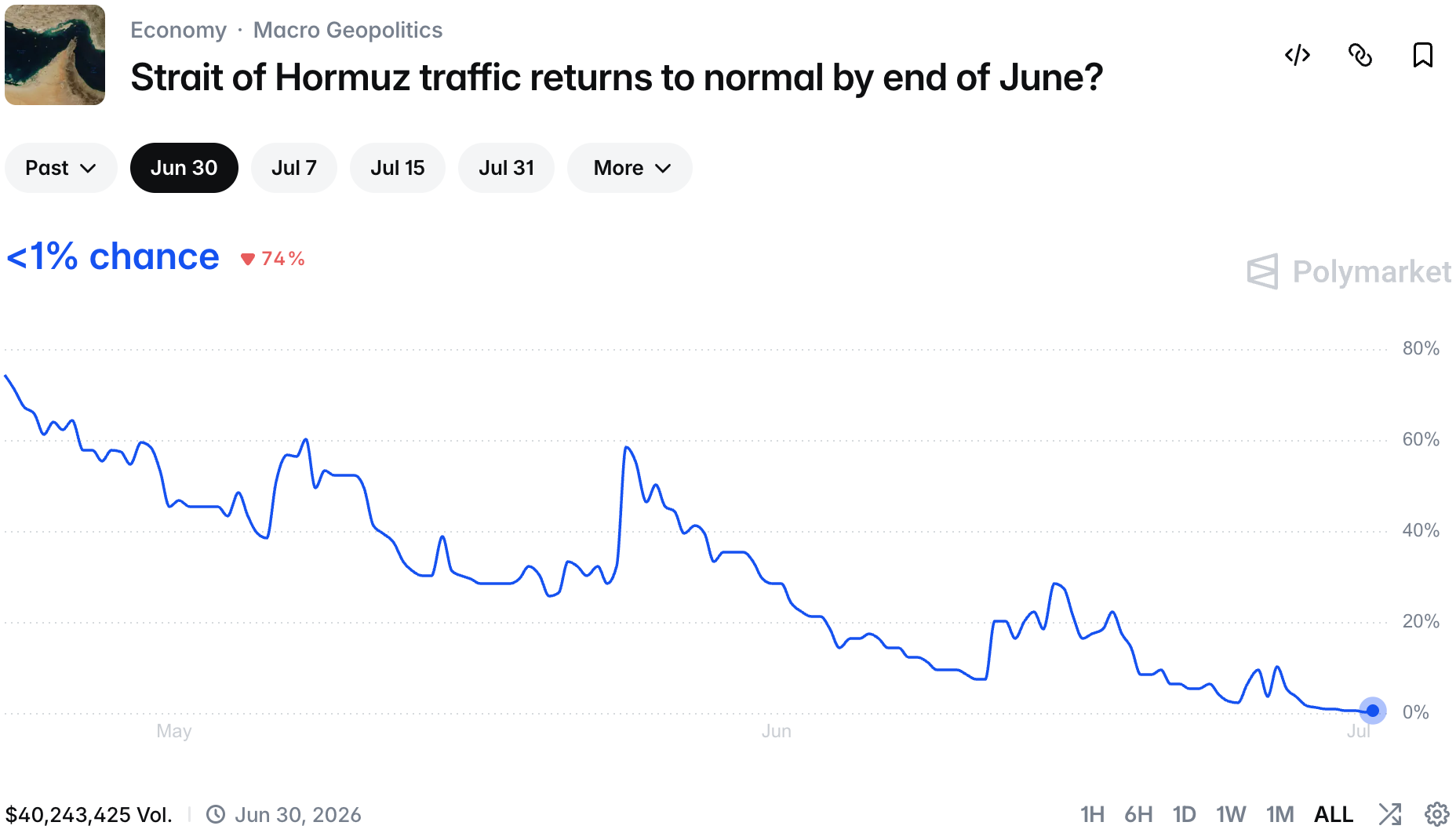
The permanent peace deal market traded all over the place. There was no clear long-term trend that could be attributed to fundamental traders buying excess liquidity below fair value price. The Strait of Hormuz market, on the other hand, has a clear long-term trend, despite constant narratives causing short-term spikes.
Sharp, fundamental traders were accumulating shares on the SOH market as time went on. Each spike was quickly bought out and with lack of new liquidity on the Yes side, the price went back to trend eventually.
The correct conclusion for fundamental traders/forecasters is to trade the seemingly more efficient markets. Thanks to the availability of sources beyond news and scoops, you can take better advantage of the mispricings caused by misinformation campaigns. You just need to use these sources and trade against the news-driven misinformation. A Brier score of 0.24 represents a market that is extremely inefficient anyway.
Prediction Markets
No markets today
Wrap up
As the Trump presidency progresses, market selection is becoming the most important skill a fundamental trader/forecaster can have. Brier score alone is simply not an adequate measure of market attractiveness. You need to weigh it against the quality of available information sources to have a clear picture of risk/reward.
This article is a distillation of my discussion panel on Manifest, where we discussed the impact of misinformation on prediction markets with top prediction markets traders.
Stay strong and see you soon!
This is not official investment or life advice. Do your own research. These are only my opinions and I encourage anyone to do their own research before putting any money anywhere.